
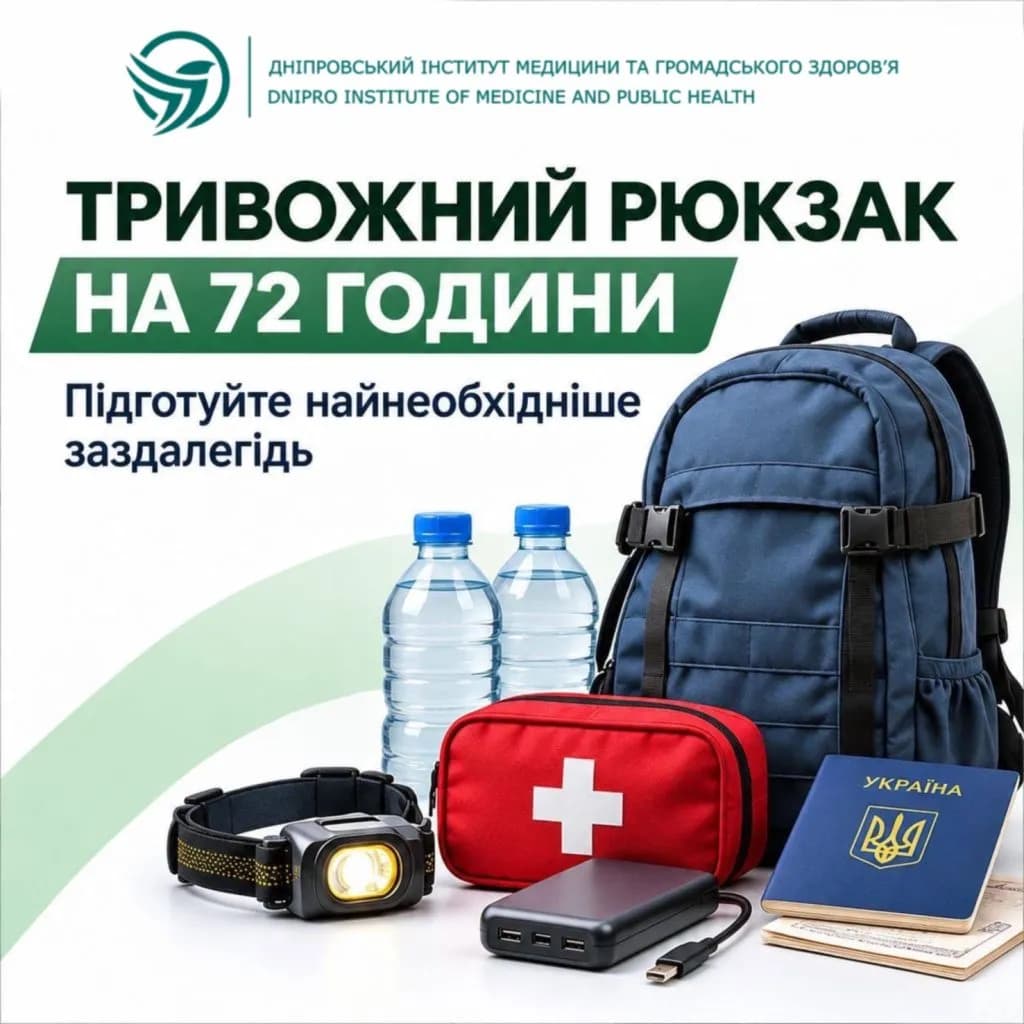
Under martial law, being prepared for emergencies is an essential part of personal safety. Shelling, forced evacuation, prolonged stays in shelters, and disruptions to electricity and water supplies may require quick and coordinated action. That is why emergency preparedness experts recommend assembling an emergency backpack containing essential supplies well in advance.
An emergency backpack is a compact collection of essential items designed to meet a person's basic needs during the first days of an emergency. The 72-hour period is a practical guideline for planning self-sufficiency, helping determine the necessary supplies of water, food, medication, and other essentials.
What Should an Emergency Backpack Contain?
According to the recommendations of the State Emergency Service of Ukraine (SESU), a sturdy and comfortable backpack with a capacity of at least 25 litres is a suitable choice.
It should have comfortable shoulder straps, water-resistant protection, and enough compartments to organise its contents. At the same time, the backpack should not be excessively heavy, as you may need to carry it yourself over considerable distances during an evacuation.
What Should You Pack?
- Documents and money. Passports, children's birth certificates, important documents and copies, bank cards, cash, and written contact details for family members. Documents should preferably be stored in a waterproof bag.
- Communication and lighting equipment. A mobile phone, chargers, a power bank, a flashlight, spare batteries, and a compact radio receiver.
- Water and food. Drinking water, energy bars, nuts, dried fruit, canned food, and other non-perishable products that do not require complicated preparation. The quantity of supplies should be calculated individually, taking the overall weight of the backpack into account.
- Clothing and personal hygiene items. A change of underwear, socks, warm clothing, a raincoat, an emergency thermal blanket, wet wipes, and personal hygiene products.
First-aid kit. Personal medications, dressings, medical gloves, adhesive bandages, scissors, a reliable tourniquet, and other essential first-aid supplies.
Particular attention should be paid to medications taken regularly. It is advisable to carry at least a week's supply, taking storage requirements into account.
The Ministry of Health of Ukraine has also published recommendations on preparing a first-aid kit for emergencies, emphasising the importance of having essential medical supplies and personal medications readily available.
For children, people with chronic conditions, and persons with disabilities, the contents of the backpack should be adapted to their individual needs. Pet owners should also prepare a separate supply of food, water, a carrier, and veterinary documents.
Why Practical Skills Matter Just as Much as Equipment
Having a first-aid kit does not, by itself, guarantee that someone will be able to provide effective assistance in an emergency. This is particularly important in cases of severe bleeding, which can pose an immediate threat to life.
It is essential not only to have a tourniquet or dressing materials but also to understand when and how to use them correctly.
This is emphasised by Alisa CHORNOKNYZHNA, Director of the DIMP Centre for Simulation-Based Learning and Innovative Technologies, emergency medicine physician holding the highest professional qualification category, and instructor in pre-hospital and emergency care:
“Having an emergency backpack is undoubtedly important. But I always emphasise that simply packing the necessary items is not enough. You also need to know how to use them.
For example, someone buys a high-quality tourniquet, puts it in their first-aid kit, and assumes they are now prepared for an emergency. But would they be able to apply it correctly to themselves using just one hand? Would they know how to help another person experiencing severe bleeding?
That is exactly why we devote so much attention to practical training during our sessions. Watching a procedure on a screen or listening to an instructor explain it is one thing. Actually practising the skill yourself, making mistakes, correcting them, and learning to perform it properly is something entirely different.
In a critical situation, we may not have time to think things through. That is why it is so important to practise essential actions in advance. Sometimes, this preparation can save a life.”
Knowledge of first-aid protocols, skills in controlling life-threatening bleeding, performing cardiopulmonary resuscitation (CPR), and responding to medical emergencies can make all the difference before emergency services arrive.
This is why practical training, particularly through simulation-based exercises, is an essential part of developing a strong safety culture.
Preparedness Starts in Advance
An emergency backpack should be kept in an easily accessible place, and its contents should be checked regularly. Particular attention should be paid to the expiry dates of medications and food, the charge of electronic devices, and whether the clothing is appropriate for the current season.
It is equally important to discuss an emergency plan with your family in advance, including evacuation procedures, possible routes, and ways to stay in contact.
Emergency preparedness is a combination of essential equipment, knowledge, and practical skills. Preparing in advance helps prevent panic, makes it easier to act confidently, and reduces risks to life and health.
Practical Training at DIMP
The Dnipro Institute of Medicine and Public Health regularly organises open practical first-aid training sessions, welcoming both healthcare professionals and anyone interested in learning essential life-saving skills.
Under the guidance of experienced instructors, participants have the opportunity to practise controlling life-threatening bleeding, performing cardiopulmonary resuscitation (CPR) on adults and children, using an automated external defibrillator (AED), and providing assistance in other emergency situations.
Training sessions use modern manikins and simulation equipment, allowing participants to practise in scenarios that closely resemble real-life emergencies.
Follow DIMP's social media pages, keep an eye out for announcements of upcoming training sessions, and take part in practical learning opportunities!
Because knowing how to respond promptly and correctly in a critical situation can save someone's life.
References
- Ministry of Health of Ukraine. “How to Prepare a First-Aid Kit for an Emergency.”
- Ministry of Health of Ukraine. “What to Include in Your Home First-Aid Kit.”
- Ministry of Internal Affairs of Ukraine. “Emergency Go-Bag: What You Should Have Ready.”
- State Emergency Service of Ukraine. “What to Pack in an Emergency Go-Bag.”